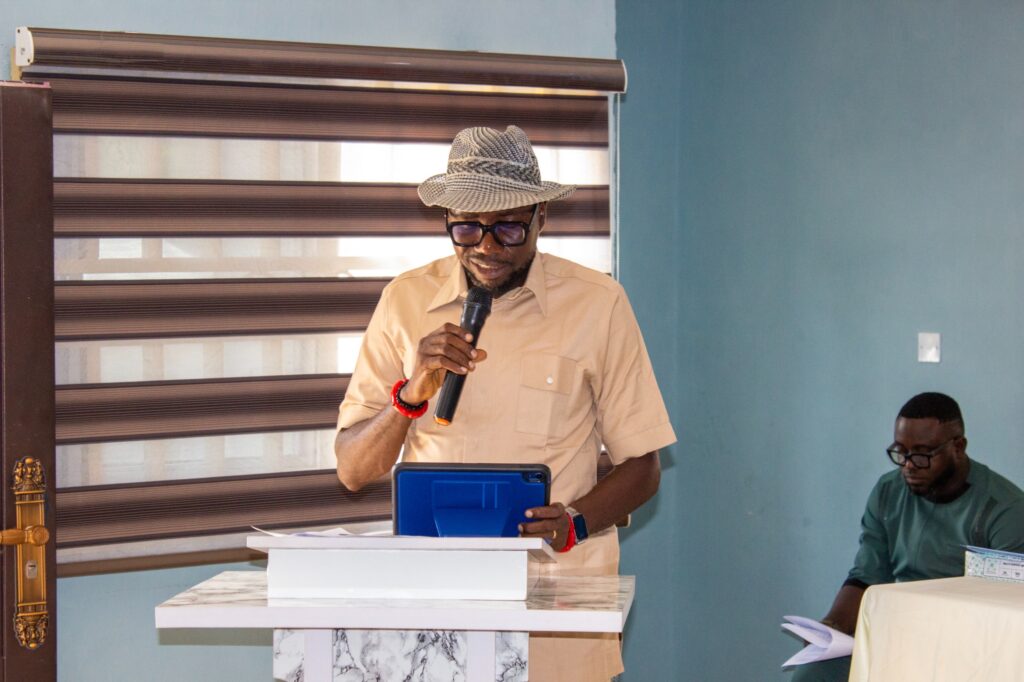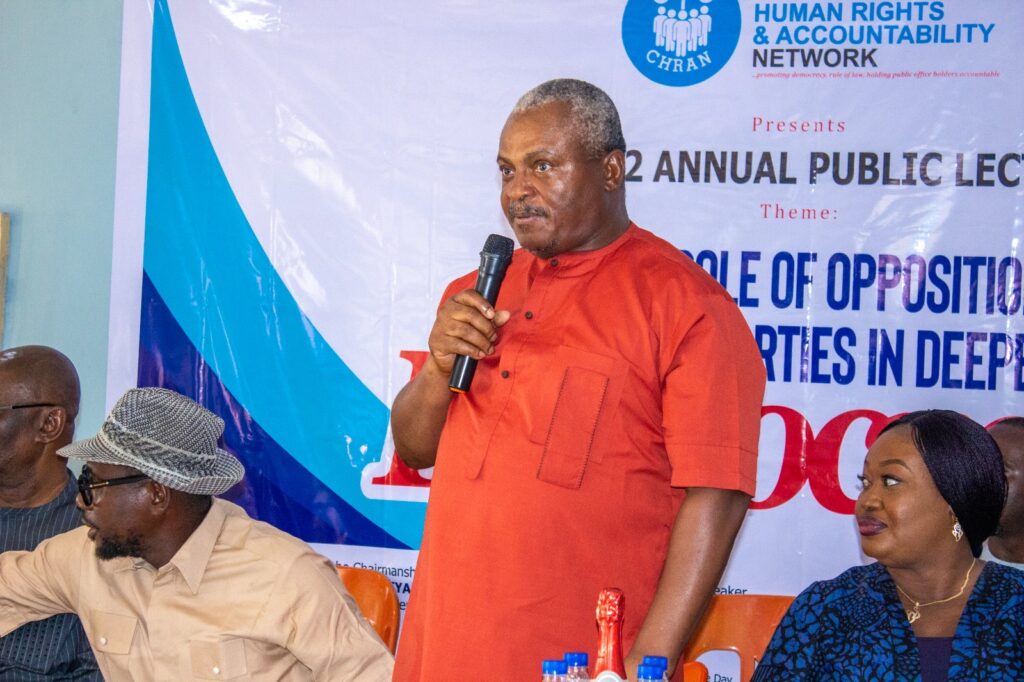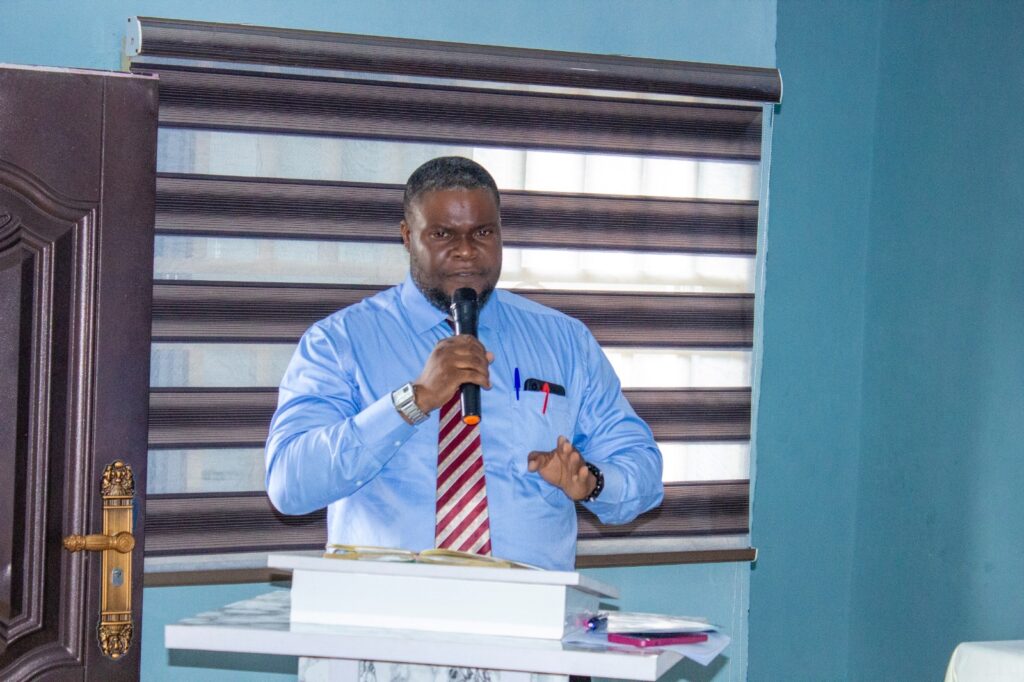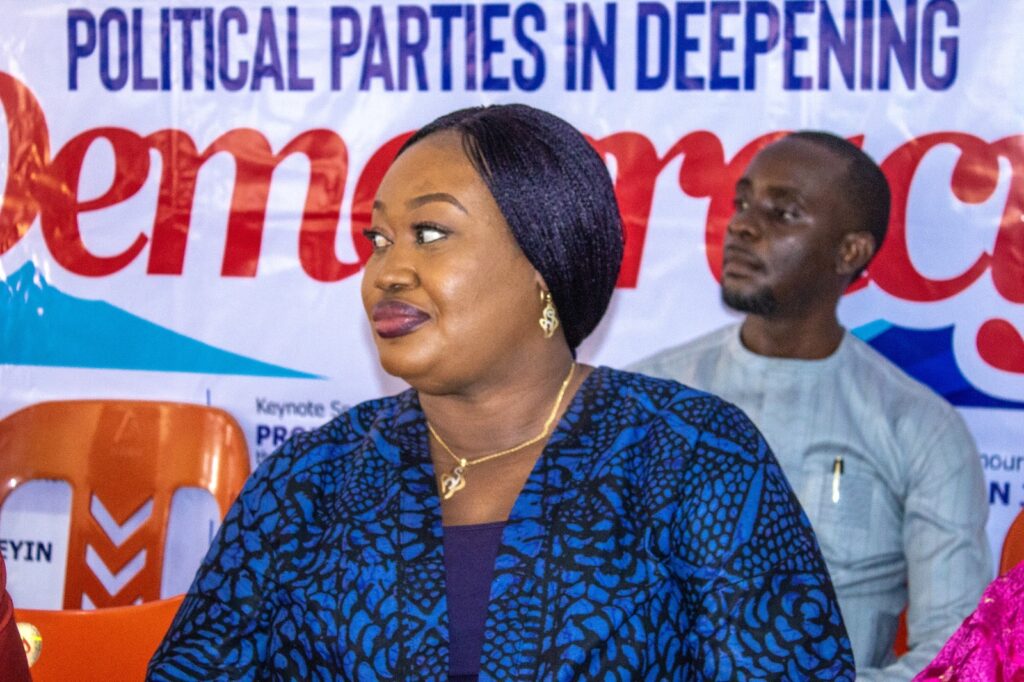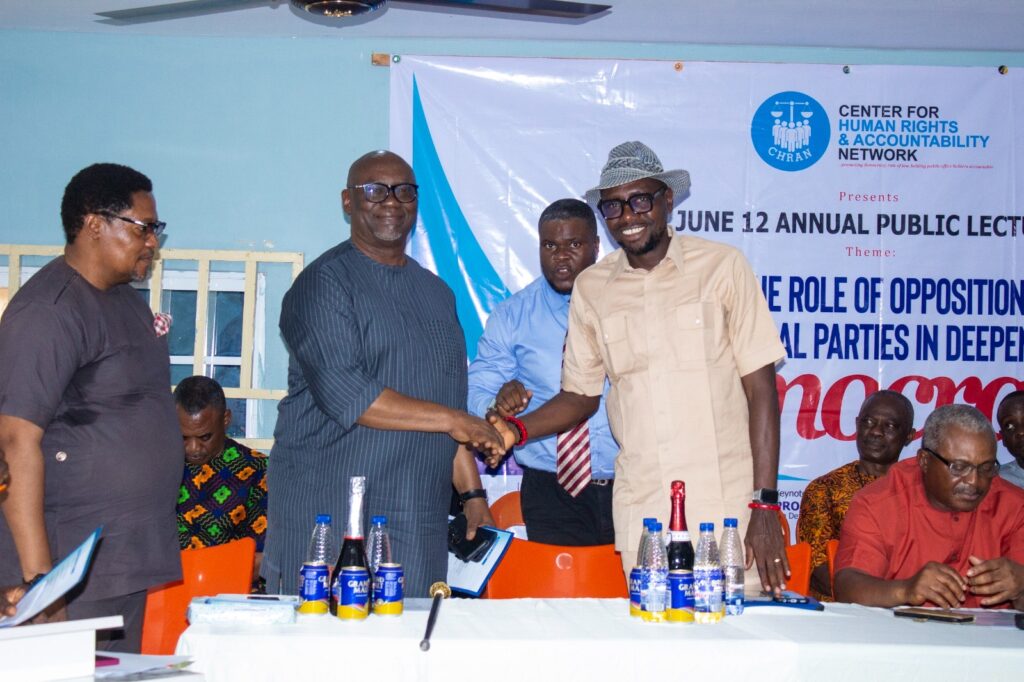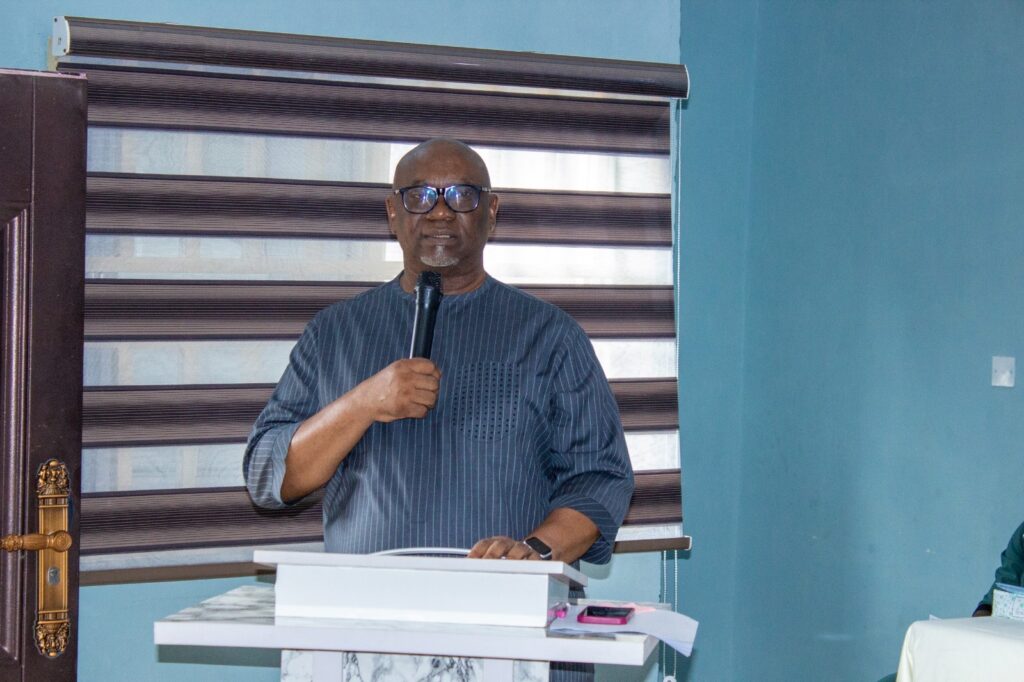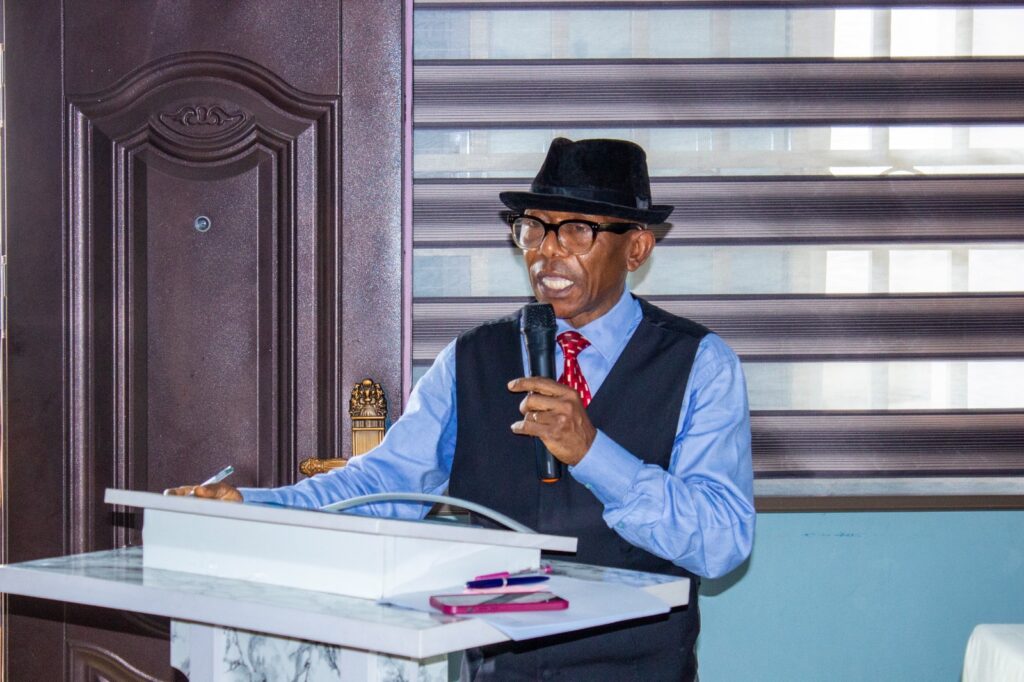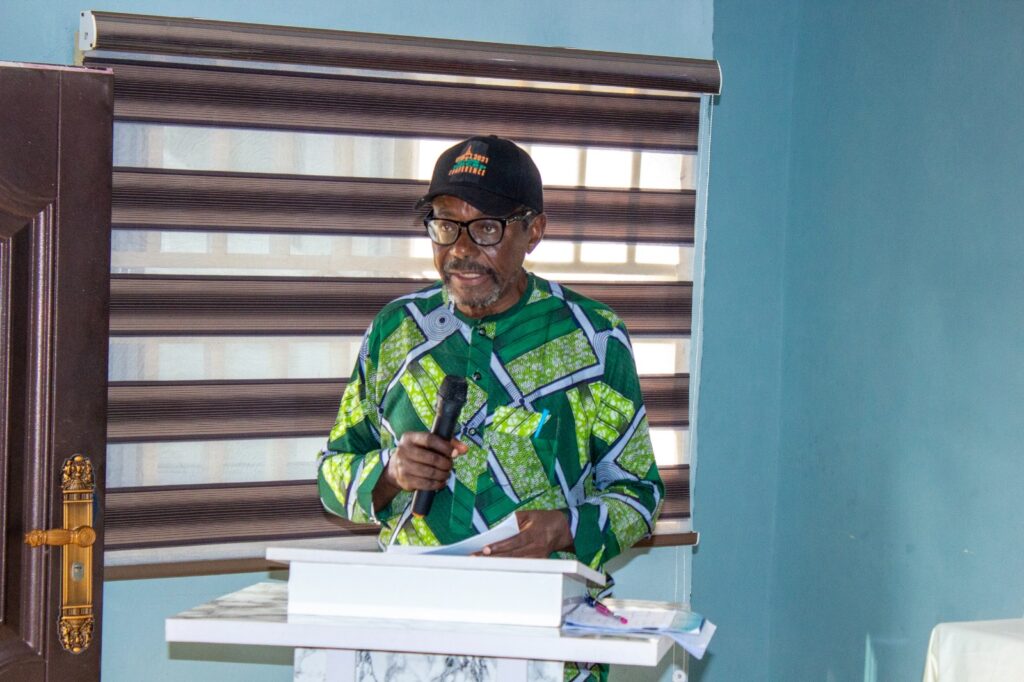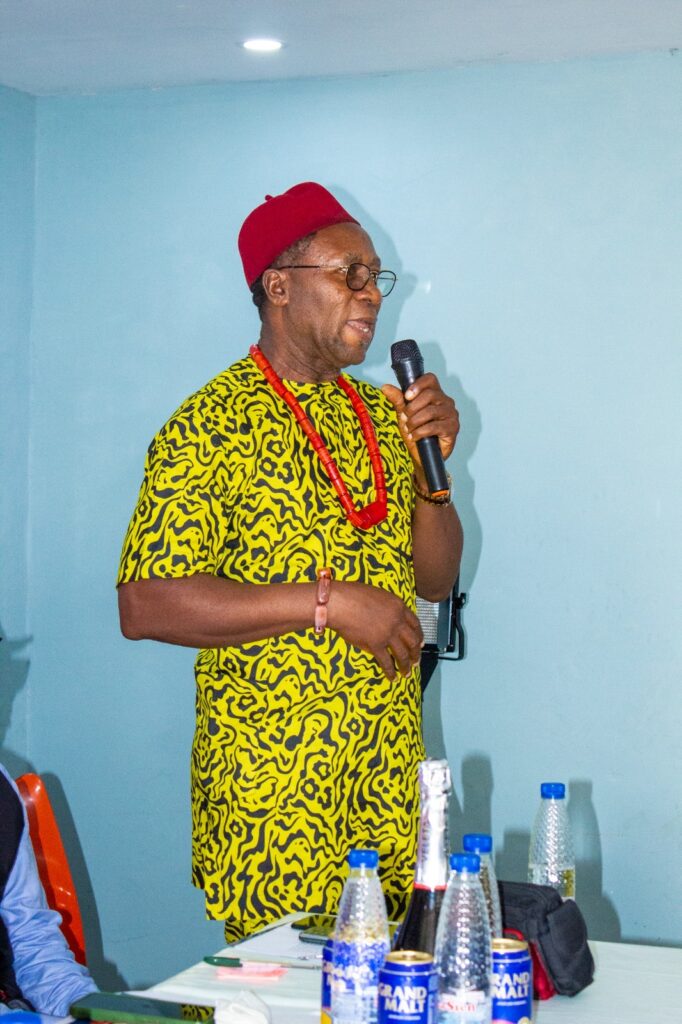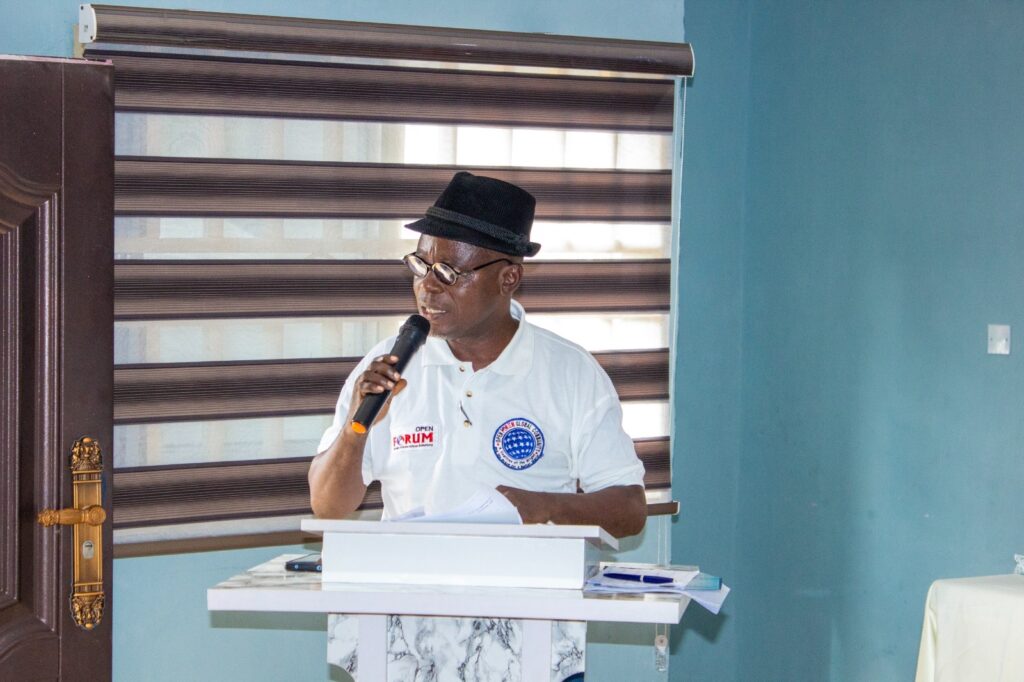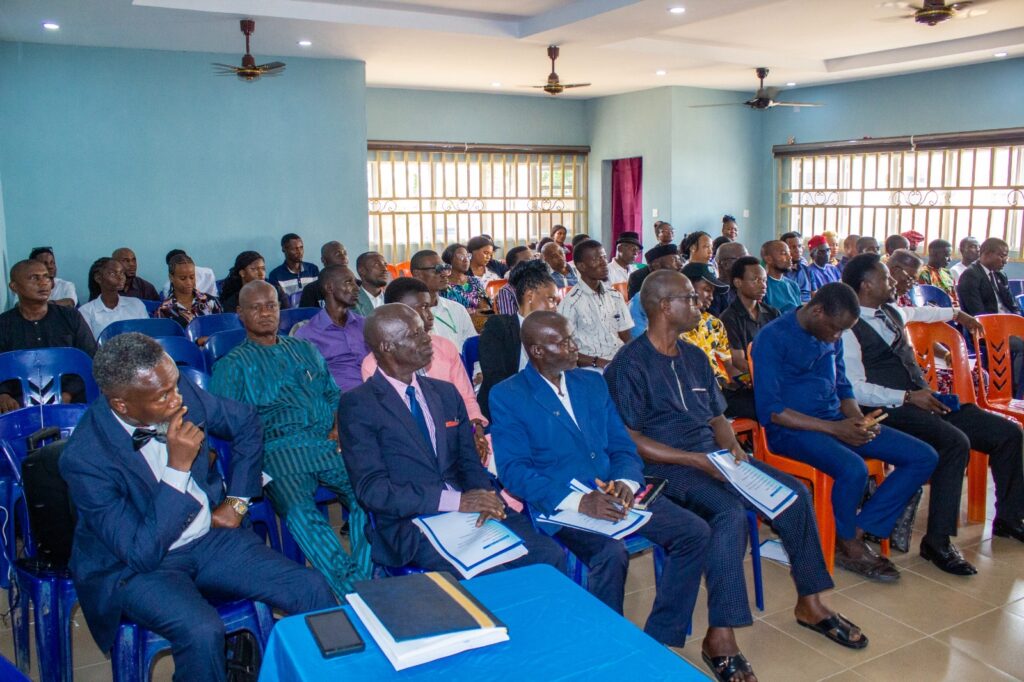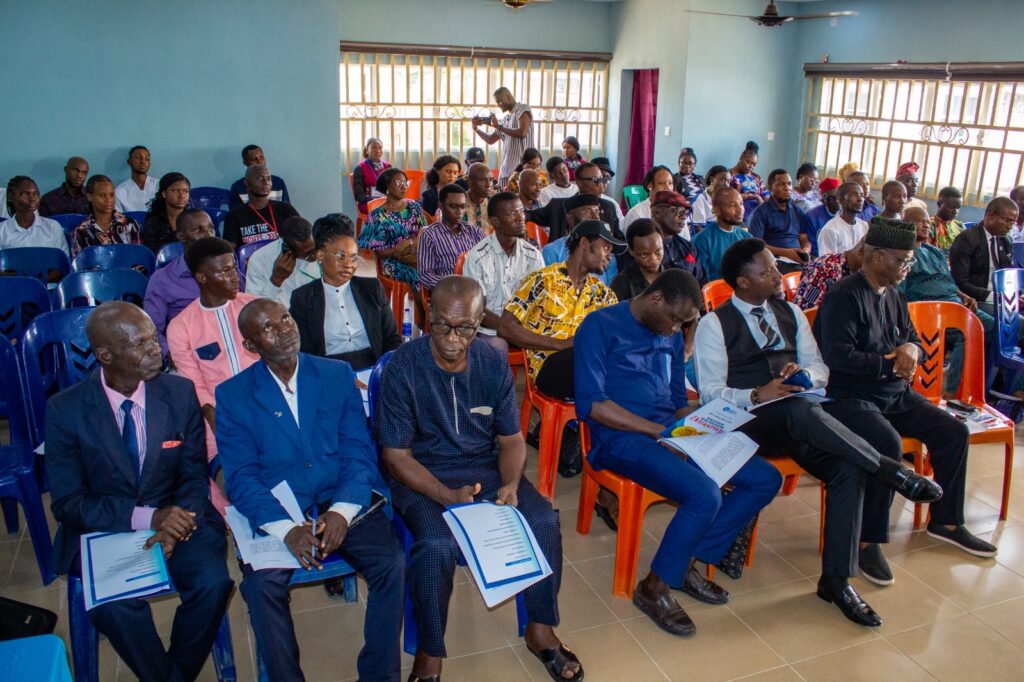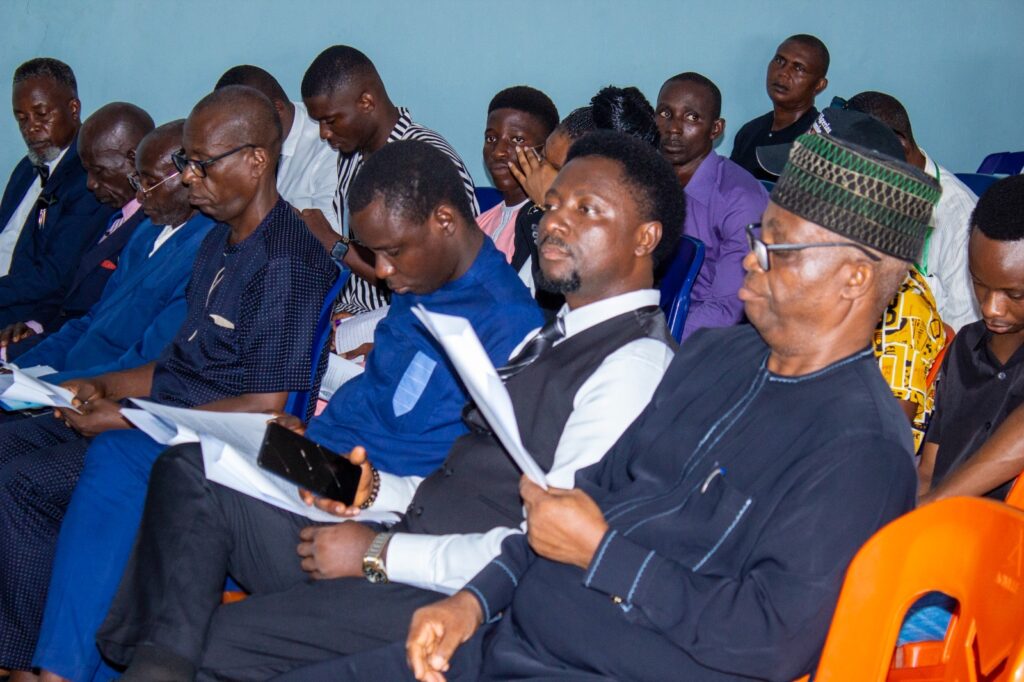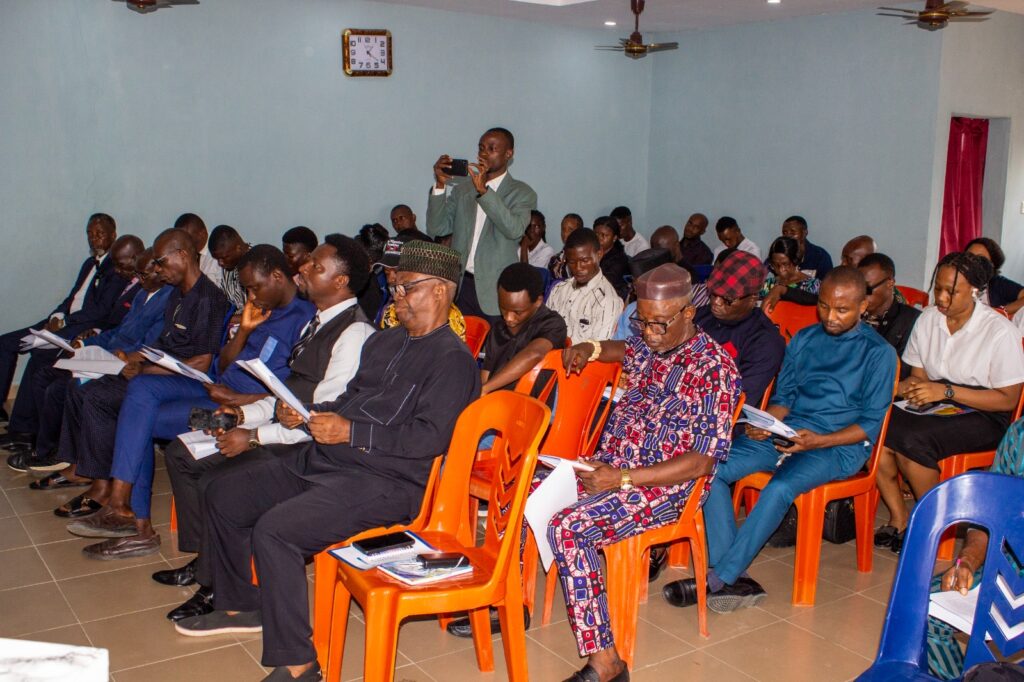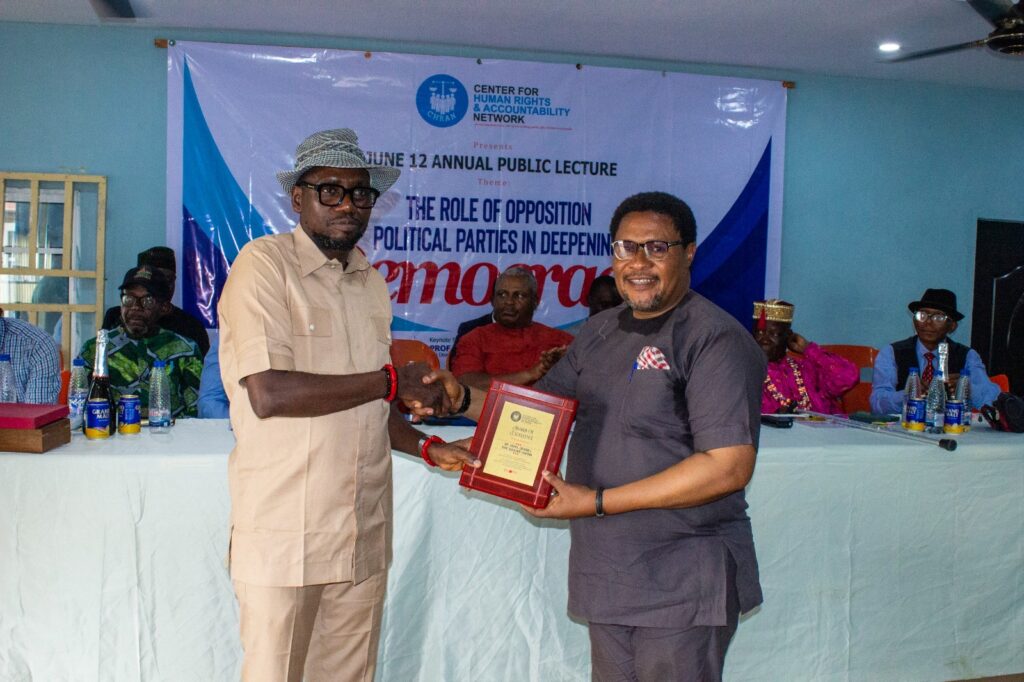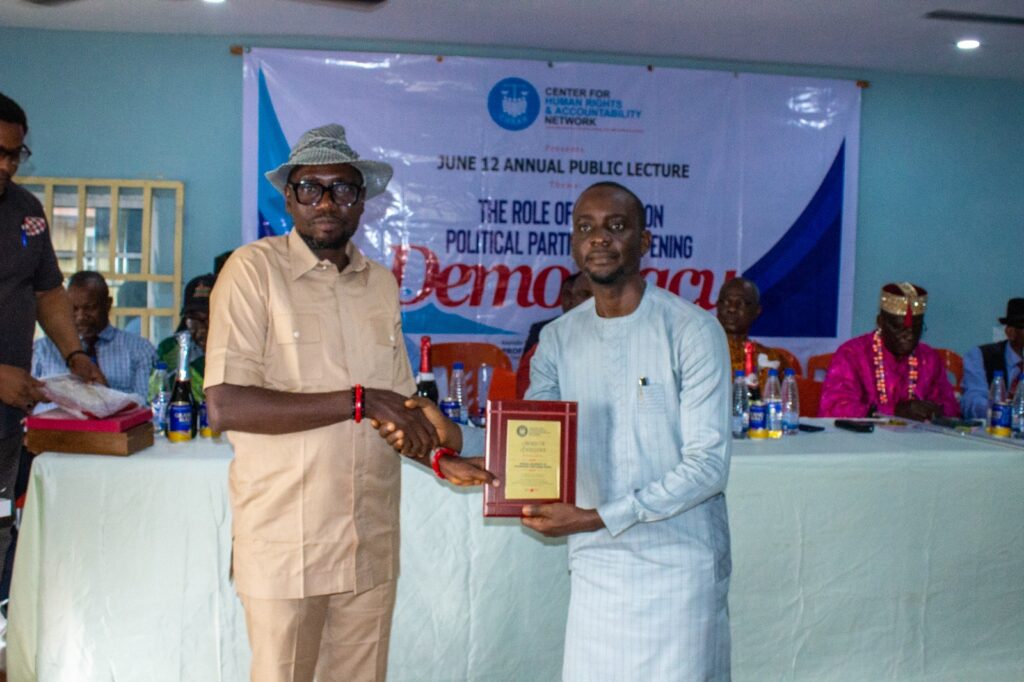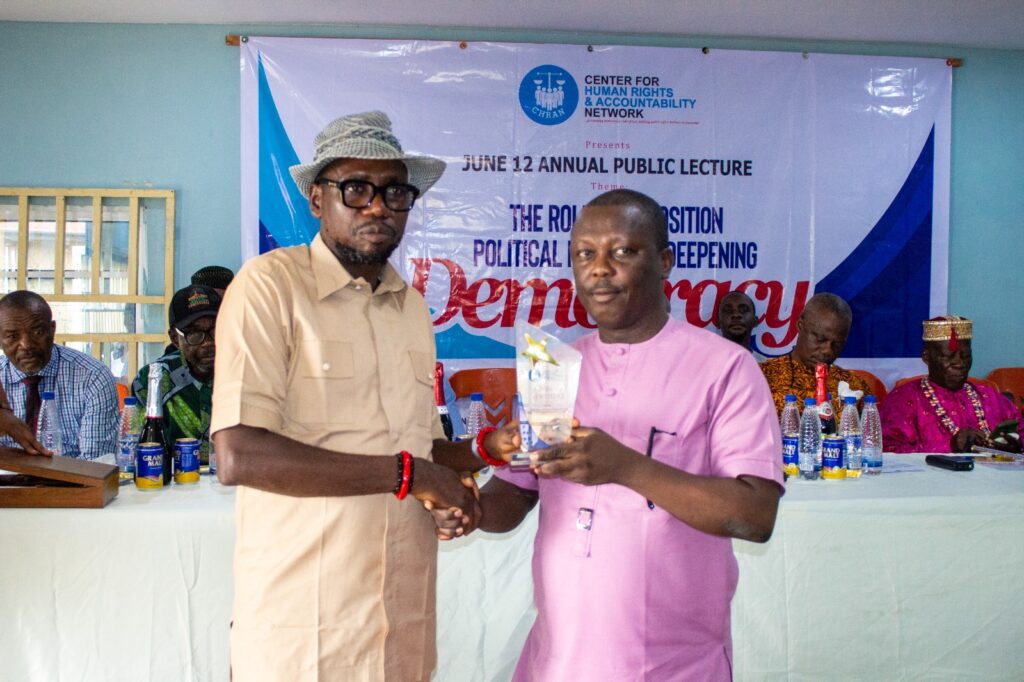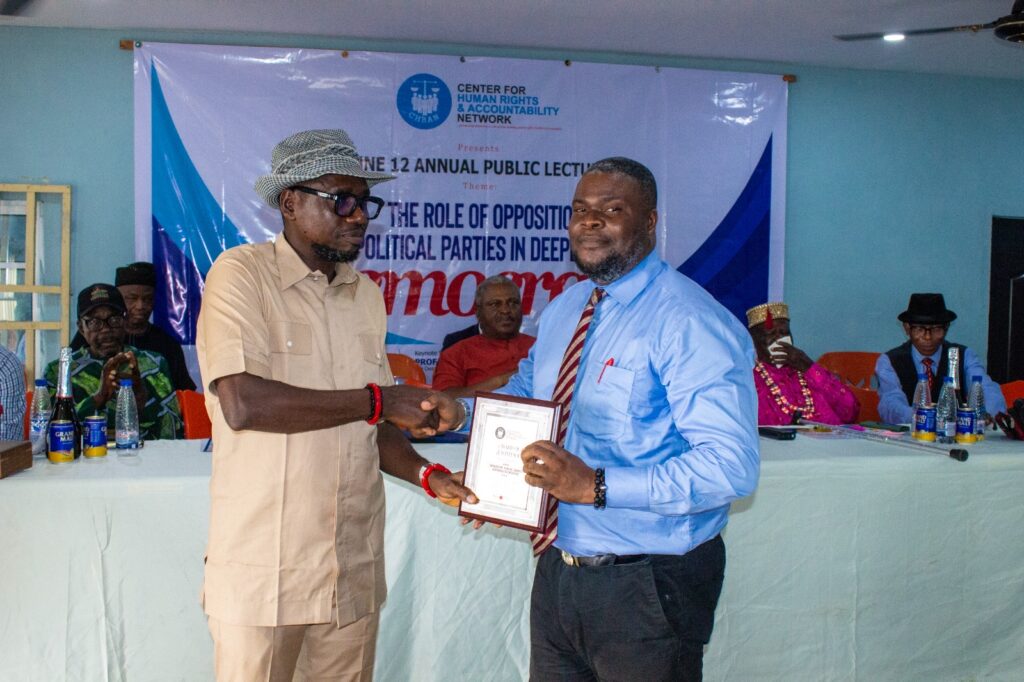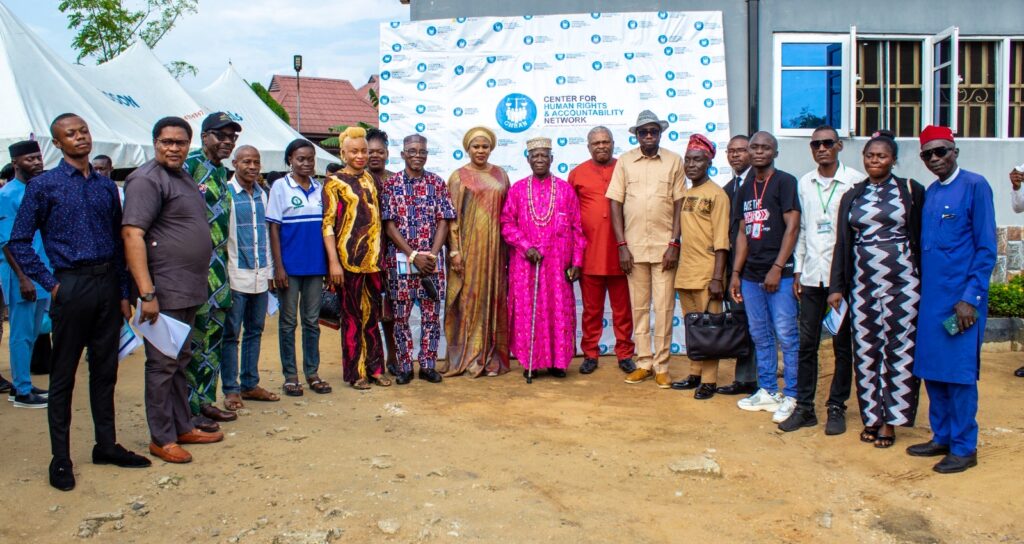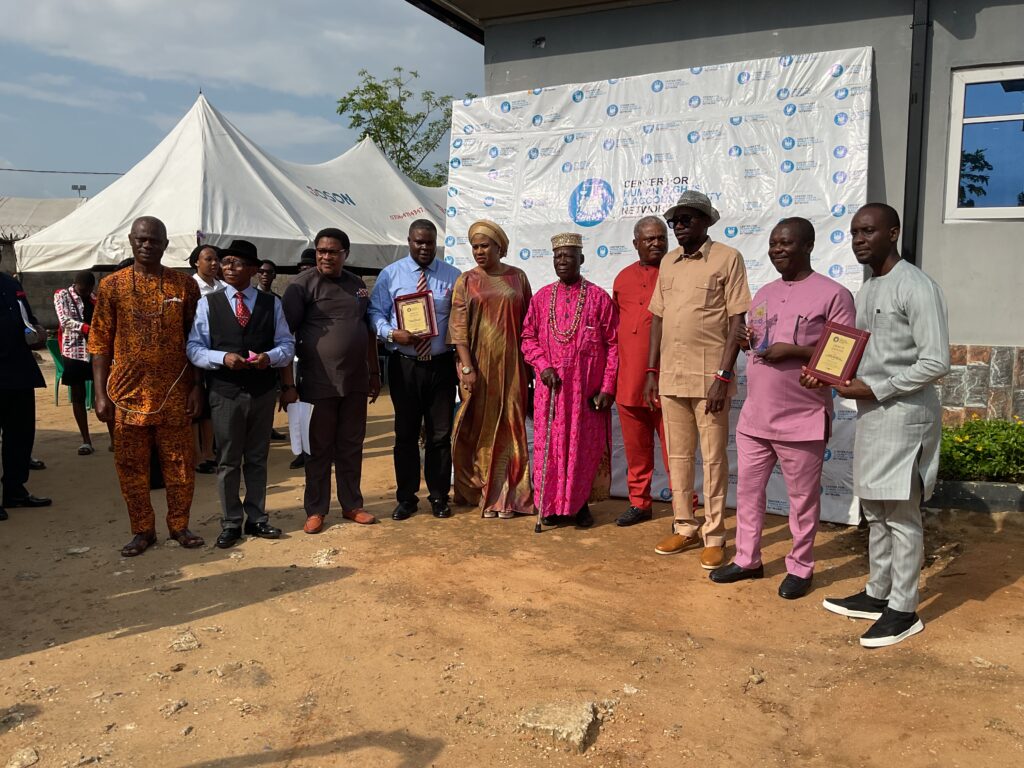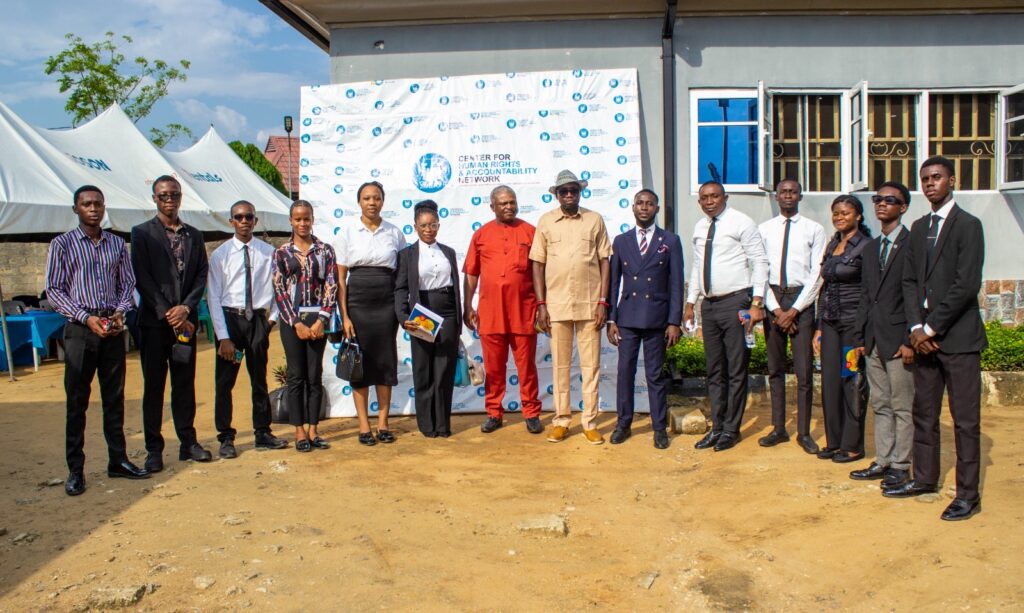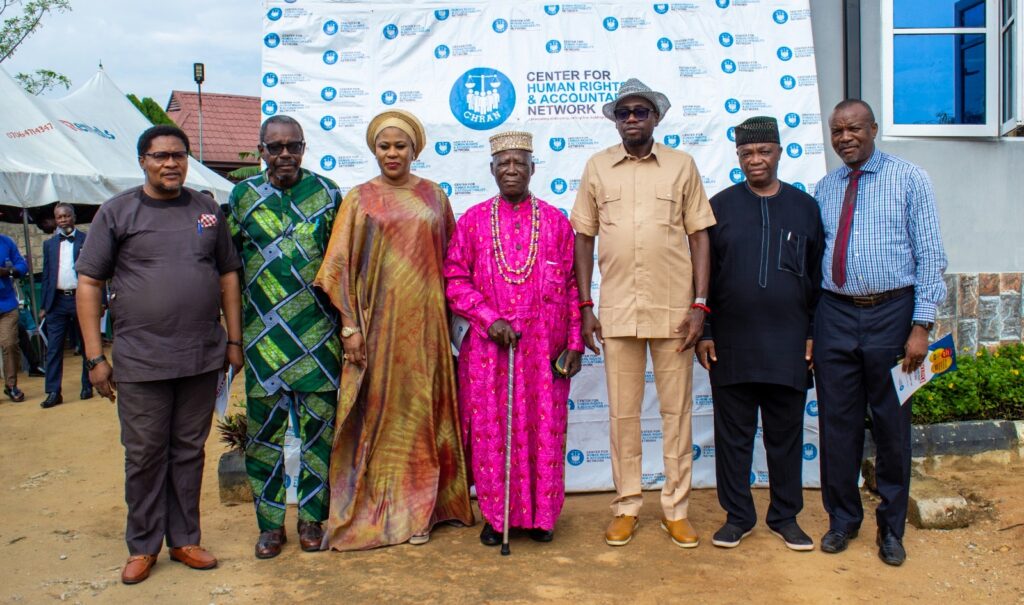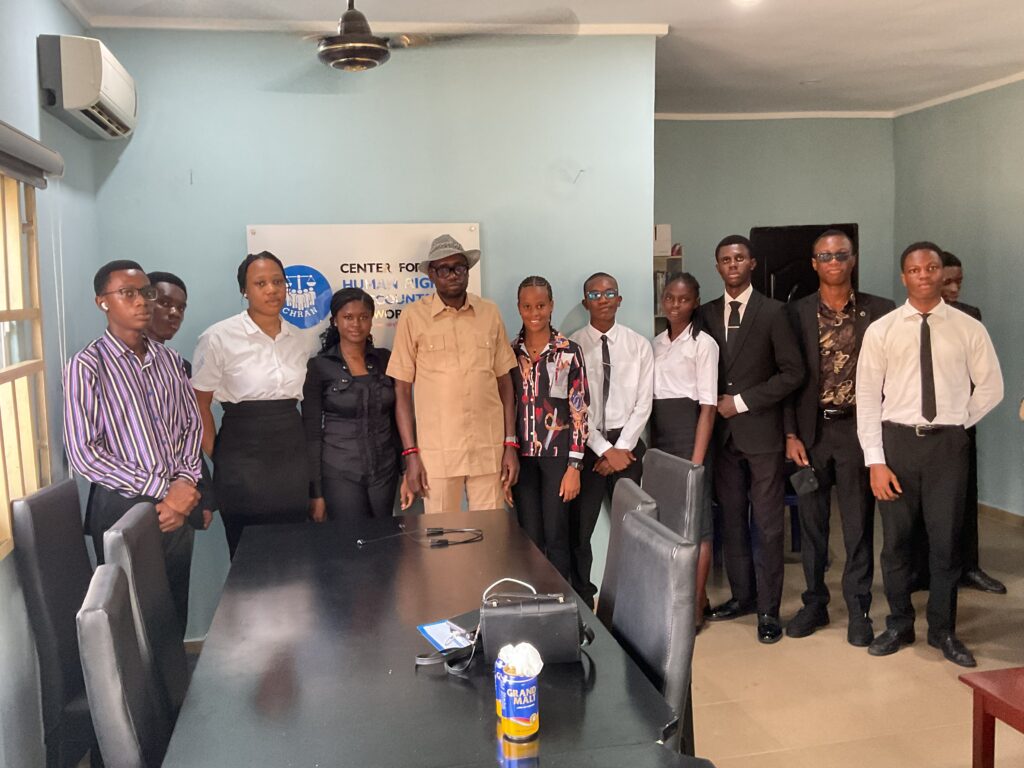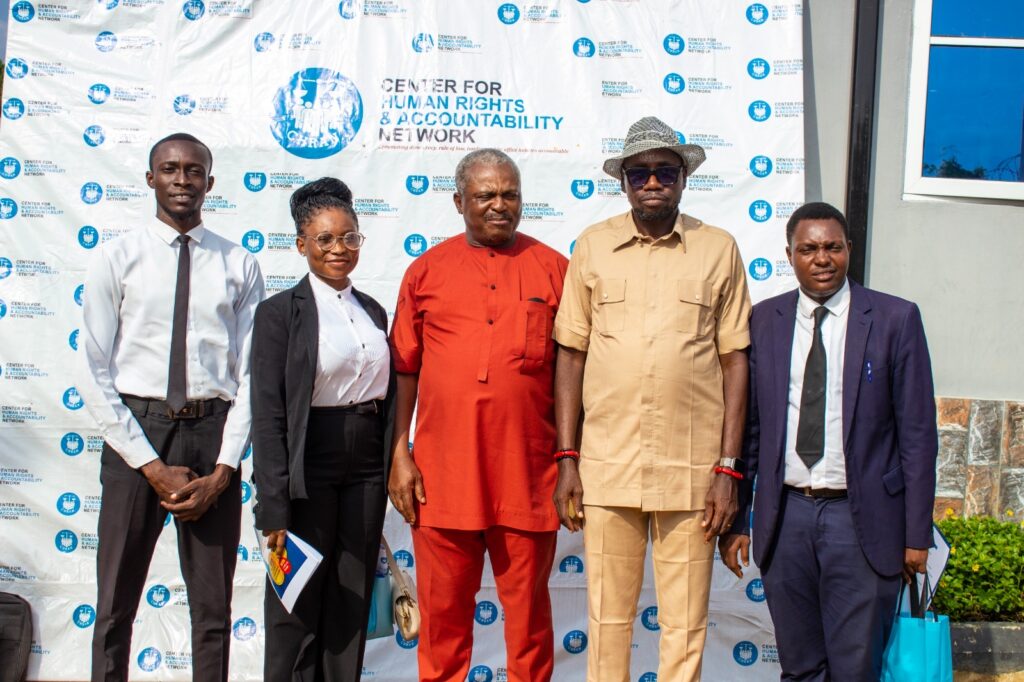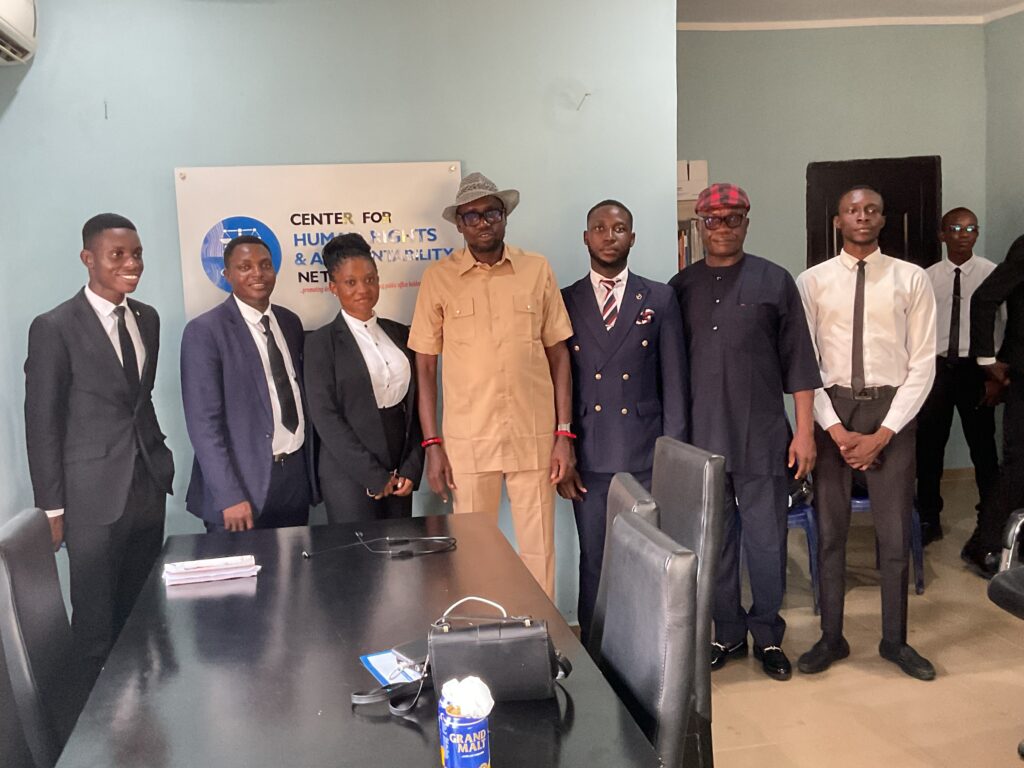
Welcome Address by the Director, Center for Human Rights and Accountability Network (CHRAN), Otuekong Franklyn Isong, at the June 12 Annual Public Lecture to mark the 2025 Democracy Day in Nigeria with the theme “THE ROLE OF OPPOSITION POLITICAL PARTIES IN DEEPENING DEMOCRACY,” held at the CHRAN Conference Hall, 15 Akpa Ubeh Street off Babangida Avenue, Uyo, Akwa Ibom State on Friday, June 13, 2025.
Protocol,
1. I feel highly honoured, as the Director of Center for Human Rights and Accountability Network (CHRAN), to welcome you to this June 12 Annual Public Lecture to mark the 2025 Democracy Day in Nigeria. This event is a sober reflection to us in CHRAN and to other progressives across the Nigerian State who were part of the struggles for the return to democracy in Nigeria.
2. Over the years, the CHRAN and other civil society organisations have been organising symposia, seminars, and public lectures such as this event to commemorate the June 12, 1993 Presidential Election won by late Chief Moshood Kashimawo Abiola, GCFR, using the event to call on the Nigerian government to recognise the winner of the June 12, 1993 Presidential Election, Chief M.K.O. Abiola and to adopt June 12 as the official Democracy Day in Nigeria. These advocacies paid off in June 2018 when former President Muhammadu Buhari bestowed the national honour of Grand Commander of the Federal Republic (GCFR), reserved only for the Heads of State in Nigeria, posthumously on Chief M.K.O. Abiola and also declared June 12 formally as the Democracy Day in Nigeria.
3. Since the advent of the President Bola Ahmed Tinubu administration, the federal government has been marking June 12 as a public holiday every year to commemorate Democracy Day in Nigeria. The President delivers nationwide broadcast on June 12, reflecting on Nigeria’s democratic journey, honouring the champions of our democracy, such as the late Chief M.K.O. Abiola and others, while reviewing the nation’s commitment to democratic principles.
4. On February 20, 2025, Nigeria’s former Head of State, General Ibrahim Badamasi Babangida, published his autobiography titled: “A Journey in Service.” The long-awaited book has reignited national and international discussions, particularly concerning the annulment of the June 12, 1993, presidential election, widely believed to have been won by Chief Moshood Abiola. It was the first time, General Ibrahim Babangida admitted publicly that Chief M.K.O. Abiola was the rightful winner of the June 12, 1993 Presidential election. He stated in his book: “Looking back now, the June 12 saga was undeniably the most challenging moment of my life and, in certain respects, one of the most painful.” Babangida expressed regret over the annulment, describing it as a “most regrettable” incident in Nigeria’s history and accepted full responsibility for the decision. But, in a controversial claim, Babangida said that forces led by late General Sani Abacha annulled the election without his knowledge or authority. We in CHRAN disagree with Babangida’s assertion. We view this as an attempt at pushing the blame. We expected General Babangida to accept full responsibility for the annulment of the June 12, 1993 Presidential Election, apologise to Nigerians and pay tributes to the families of those who lost their lives in the aftermath of his annulment of June 12, 1993 Presidential Election, rather then, dancing on the graves of Nigerians who lost their lives in the struggles by attempting to push the blame to late General Sani Abacha. We in CHRAN put the blame on General Ibrahim Babangida and hold him solely responsible for the annulment of the June 12, 1993 presidential election even when the election was adjudged by both national and international observers as the freest and fairest ever in Nigeria.
5. The annulment of the June 12, 1993 Presidential Election attracted condemnation nationally and internationally and provoked wide-spread protests and strikes from several progressives, trade unions and pro-democracy groups within and outside the country. The pressure forced the Military Head of State, General Ibrahim Babangida, to hurriedly step aside after installing an Interim Government on August 26, 1993 with Chief Ernest Shonekan as Head of the Interim National Government. The Interim National Government was shortly thereafter booted out by General Sani Abacha on November 17, 1993. The pressure continued and on Monday, June 8, 1998, Abacha, who had been isolated by the international community, died in the Aso Rock Presidential Villa in Abuja. He was buried on the same day according to Muslim rites and without an autopsy, fueling speculation that he may have been assassinated. However, according to government, the cause of death was a sudden heart attack.
6. General Abdulsalami Abubakar took over as the Military Head of State in 1998 following the death of General Sani Abacha. Chief Moshood Abiola, who had been arrested and detained by Abacha for attempting to validate his election, died in suspicious circumstances days after Abacha’s demise.
7. Finally succumbing to pressure, General Abdulsalami Abubakar announced the promulgation of Decree No. 24 of 1999 which birthed the Constitution of the Federal Republic of Nigeria, 1999 and ushered in the Fourth Republic on May 29, 1999 with Chief Olusegun Obasanjo as the first elected President of the Fourth Republic.
8. At this juncture, we in the CHRAN pay glowing tributes to all our Comrades and other progressives who paid the supreme price with their lives in the course of the struggle, including Chief M.K.O Abiola, the winner of the June 12, 1993 Presidential Election. In the same vein, we congratulate all of us who are alive today to celebrate this remarkable day in the history of the Nigerian State.
9. This Public Lecture is apt as it serves as a platform for all of us Nigerians to do an appraisal of the journey of the Fourth Republic twenty six (26) years after, that is, from May 29, 1999 to May 29, 2025.
10. For us in the CHRAN, we believe that no matter the situation, democratic government is preferable to any other form of government. As I said earlier, the current Nigerian democracy is founded on a Constitution that the General Abdulsalami Abubakar-led military junta hurriedly packaged and imposed on Nigerians using Decree No. 24 of 1999. This Constitution that is twenty six (26) years in existence has not effectively addressed Nigeria’s multifarious problems and challenges despite several amendments. There is no doubt that the extant Constitution requires a fundamental review, if not a complete overhaul.
11. For instance, Section 2(2) of the Constitution of the Federal Republic of Nigeria, 1999 (as amended), states that Nigeria shall be a federation consisting of States and a Federal Capital Territory. It excludes the local government areas as part of the federation thus impeding grassroots development in Nigeria.
12. In Section 7(1) of the Nigerian Constitution, the system of local government by democratically elected local government councils is guaranteed. But the funding of the local government areas is tied to the apron-strings and control of the State Governments in Section 162(6) of the Constitution, which states that each State shall maintain a special account to be called “State Joint Local Government Account” into which shall be paid all allocations to the local government councils of the State from the Federation Account and from the Government of the State. And despite the Supreme Court decision in favour of financial autonomy to the local government councils in the country, it remains academic as the judgment has not been implemented by State Governments, and the federal government who instituted the case in the Supreme Court has not taken further steps to ensure its implementation. The CHRAN had expected the State Governors to be held in contempt of the Supreme Court decision by now if President Bola Tinubu were to be serious about the financial autonomy of the local governments.
13. Again, the State Independent Electoral Commissions (SIECs) is provided for in section 197(1)(b) of the Constitution while its funding is in the hands of State Governments, making the SIECs an appendage of the State Governors. The CHRAN calls for the review of the Constitution of the Federal Republic of Nigeria, 1999, as amended, to delete section 197(1) that established SIECs and in its place create a national commission for the conduct of local government elections in the country. This will ensure free, fair and credible elections into the local government councils in Nigeria.
14. The theme of this public lecture is apt and is in response to the recent political trajectory in our democratic space. While we in CHRAN are advocating for independent candidacy to further enrich our multi-party system and broaden voters choice, we observe that the current political trend of self-serving defections from opposition political parties to the ruling party, if not checked, pose a serious threat to our hard-earned democracy. If we must deepen our democracy, opposition political parties must not be depleted, drained or silenced. If we must grow our democracy, we must resist the temptation of turning the country into a one-party State. Opposition political parties are necessary to safeguard democracy. It is on this premise that the theme of this public lecture – “The Role of Opposition Political Parties in Deepening Democracy” – is apt and timely.
15. The Keynote Speaker, Prof. Aniekan Sampson Brown, is an esteemed academic and Professor of Criminology in the Department of Sociology and Anthropology at the University of Uyo, Akwa Ibom State, Nigeria. He holds a Bachelors Degree in Sociology and Anthropology of the University of Cross River State (now University of Uyo); Master’s Degree in Sociology, University of Ibadan, Oyo State, Nigeria and a Doctorate Degree (Ph.D.) in Criminology, University of Port Harcourt, Rivers State, Nigeria. He has held several positions, including the Chairman of Academic Staff Union of Universities (ASUU), South-South Zone; Former Dean of Students Affairs, University of Uyo; Member, Board of Trustees, Bayero University, Kano and currently, he is the Dean, Faculty of Social Sciences, University of Uyo. Prof. Brown’s research encompasses various aspects of Criminology and Sociology, with notable publications, including: “An Appraisal of Electoral Processes and the Leadership Question in Nigeria”. His vast scholarship and experience attracted the Board of CHRAN to consider him fit to deliver this lecture today, and we trust that he will do justice to the theme of this public lecture.
16. We will also use this event to confer Excellence Awards to some distinguished individuals, institutions and corporate organisations who have contributed greatly in the deepening of democracy in Akwa Ibom State and Nigeria at large. This set of Award recipients has been selected after a thorough investigation, scrutiny, research and assessment carried out independently by the Board of CHRAN. By this Awards, other public office holders, institutions and corporate organisations doing businesses in Akwa Ibom State and Nigeria will be spurred to contribute to the advancement and development of Akwa Ibom State and Nigeria at large.
17. My address will be incomplete if I do not pay tribute to Mr. President, Comrade Bola Ahmed Tinubu. Mr. President is one of us. He was one of the frontline June 12 activists. He made notable contributions during the dark days of the military junta when we were in the trenches struggling for the actualisation of June 12 and for the return to democratic government in Nigeria. In the spirit of camaraderie, I am praying for him to succeed as Nigeria’s President. We urge him to do things differently from his predecessors-in-office. Let his policies and programmes be pro-Nigerians. I believe that Mr. President has good intentions for this country. He has demonstrated the capacity to provide good governance to Nigerians. He has the strength of character to make a good leader.
18. In Akwa Ibom State, the Governor of Akwa Ibom State, Pastor Umo Eno, has started well. He is doing a good job. His scorecard in two years speaks volumes for him. His approach to governance, from the CHRAN’s assessment, is the bottom to top approach. He is concentrating more on the downtrodden than the elites. He is paying pension promptly, and settling the backlogs of gratuities owed by successive administrations in the State. Under his watch, Akwa Ibom has remained one of the most peaceful States in the federation. The security agencies are being supported greatly by the Governor to carry out their responsibilities of crime fighting and crime prevention in the State. We appreciate and commend the concerted efforts of security agencies in the State for their relentless efforts to nip security challenges in the bud.
19. As a watchdog of the society and conscience of the masses CHRAN considers that His Excellency, Pastor Umo Eno, deserves commendation for executing life-touching projects in Akwa Ibom State. We pray for the Governor to succeed and we are convinced that he will succeed if he continues with governance undistracted by 2027 politicking.
20. Distinguished ladies and gentlemen, it is CHRAN’s civic responsibility as a civil society cum pro-democracy organisation in Nigeria with the core mandate of holding governments at all levels accountable to the people, to continue to carry out this mandate responsibly.
21. The CHRAN does not belong to any political party. Our focus is the Nigerian State and the wellbeing of Nigerians. Hence, our advocacies are centered around good governance, observance and promotion of the rule of law, transparency and accountability. We want democracy to endure, and we seek good governance for the overall benefit of all Nigerians.
22. We congratulate President Bola Tinubu, Members of the National Assembly, Governor Umo Eno and Members of the Akwa Ibom State House of Assembly on the occasion of their successful two years in office, and we pray God to grant them good health, safety and sound mind as they continue to provide good governance to all Nigerians, in Jesus Name, Amen!
23. Once again, on behalf of the CHRAN Board and Members, I welcome you all to this Public Lecture holding in the Conference Hall of CHRAN in Uyo, Akwa Ibom State.
24. Surely, Nigeria shall be great again.
25. Many thanks and God bless!